

Understanding Sensory Overload with a Paw-Pal by Your Side
Ever walked into a shopping centre and instantly felt your brain short-circuiting from the bright lights, background music, beeping registers and crowds? Maybe you’ve seen your child crumble after a noisy school assembly or become suddenly moody in a bustling café. It’s easy to brush it off as being “too sensitive” or “in a bad mood,” but what if there’s more to it?
This, my friend, might just be sensory overload.
And guess what? You’re not alone… and you don’t have to tackle it alone either. Sometimes the best support doesn’t speak a word… but it might wag a tail.
Let’s unpack what sensory overload really is, how it affects both kids and adults and how a calm, cuddly emotional support dog (aka your four-legged sidekick) can help bring the world back into balance.
What is Sensory Overload?

Sensory overload happens when your brain is receiving too much input from your surroundings. This could include:
- Loud noises
- Bright or flickering lights
- Strong smells
- Crowds or busy environments
- Multiple people talking at once
- Scratchy or uncomfortable clothes
- Even emotional energy from others
Think of your brain like a sponge. It can soak up a fair amount of info, but at a certain point, it’s too full… and starts dripping all over the place. That’s sensory overload.
For someone who’s neurodivergent (like those with ADHD, autism or anxiety), their sponge might fill up faster than others’. But even neurotypical people can become overwhelmed, especially in today’s fast-paced, noisy world.
How Does It Feel?
It’s different for everyone, but here are some common signs of sensory overload:
In kids:
- Meltdowns or crying “for no reason”
- Covering ears or eyes
- Avoiding touch or wanting to hide
- Sudden outbursts of anger or defiance
- Clumsiness or lack of coordination
- Trouble focusing or following instructions
In adults:
- Headaches or nausea
- Feeling agitated or irritable
- Snapping at people over small things
- Needing to leave busy spaces quickly
- Brain fog or zoning out
- Feeling physically or emotionally “done”
Sound familiar?
Sensory overload is often invisible to others, but for the person experiencing it, it can feel like drowning in a sea of noise, lights and pressure… with no life raft in sight.
The Modern World is Loud… and Unkind to Sensitive Brains
Let’s be honest: life isn’t exactly designed for sensory balance. We’ve got devices dinging 24/7, classrooms with fluorescent lighting and non-stop chatter, open-plan offices, traffic noise, scrolling screens, fast food smells… the list goes on.
Even “fun” activities… like parties or shopping… can be overwhelming when your nervous system is already under strain.
Add in a lack of sleep, hunger or emotional stress and boom: a full sensory shutdown might not be far off.
So Where Do Dogs Come In?
Now here’s the good news.
Dogs are magical.
Okay, not Hogwarts-level magic… but emotionally, neurologically and socially… they’re close.
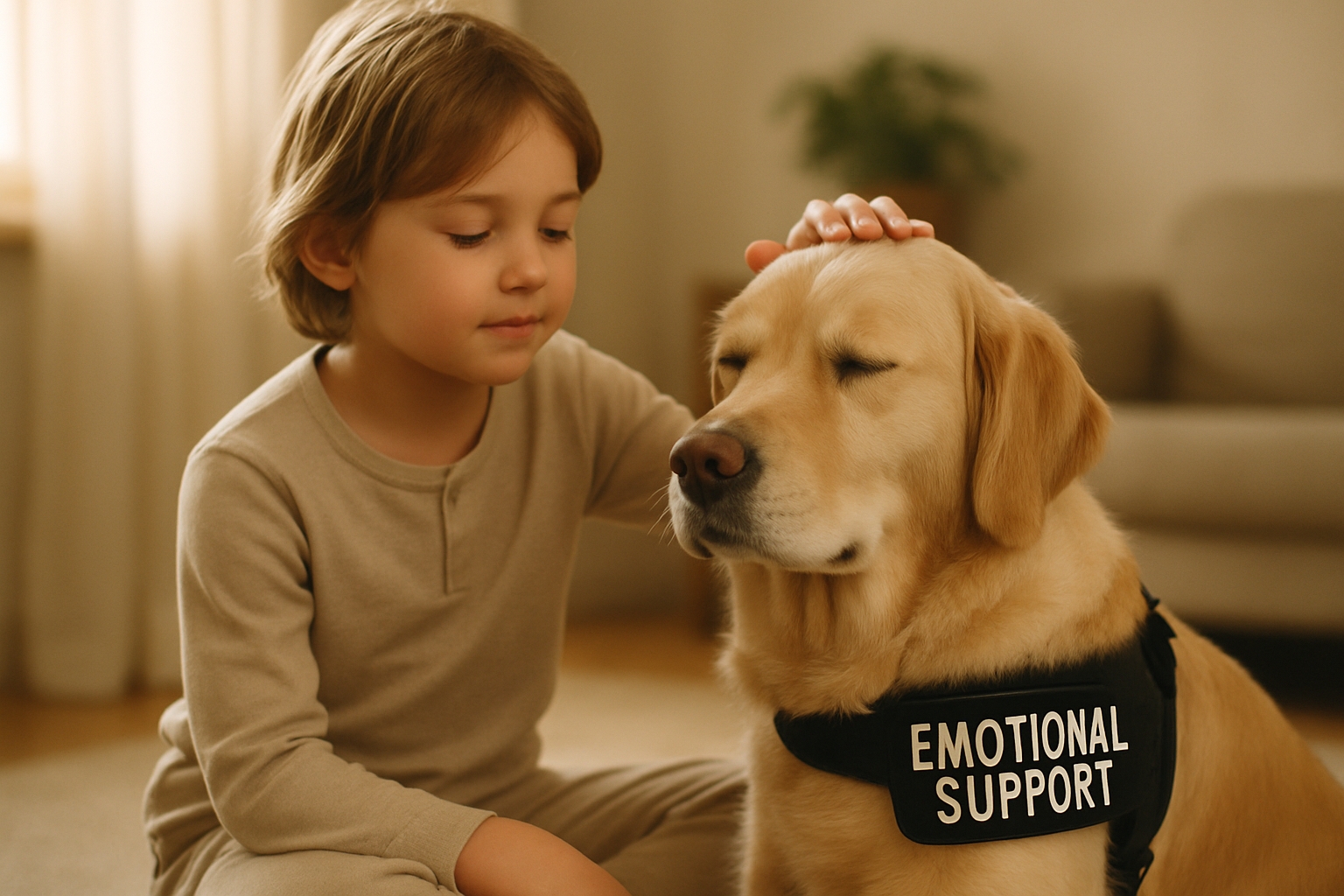
Emotional support dogs, in particular, can be a powerful buffer in the storm of sensory overload. They’re calm, consistent and full of unconditional love. They don’t judge or talk too much. They just… be.
Let’s look at a few of the ways your paw-pal helps regulate your nervous system and bring you back to safety.
1. Dogs Activate the Parasympathetic Nervous System
When you’re in sensory overload, your body thinks it’s under threat. This triggers the “fight, flight or freeze” response. Your heart rate speeds up, muscles tense and cortisol (a stress hormone) floods your system.
But when you pat a dog?
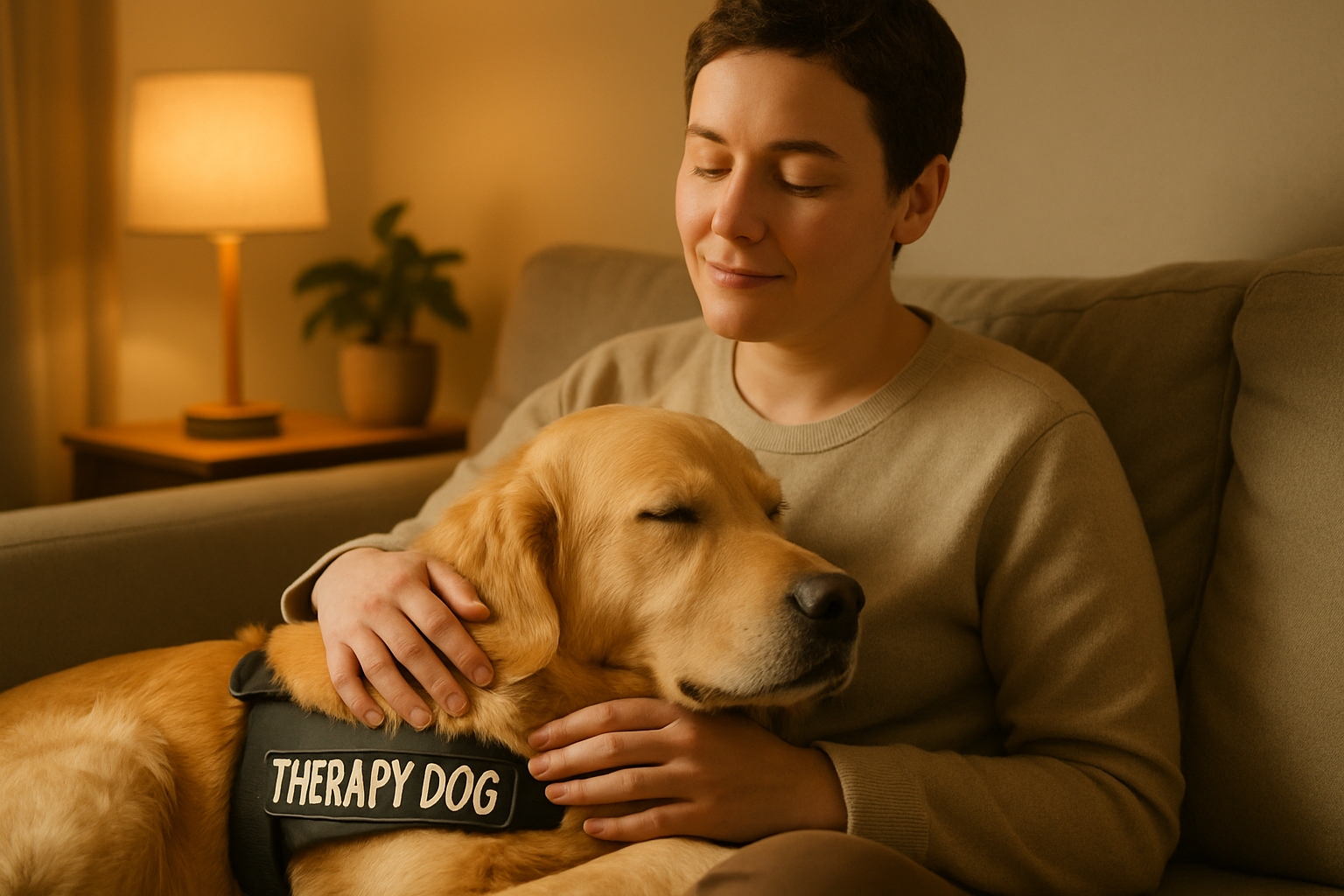
Your brain shifts gears into “rest and digest” mode. This is the parasympathetic nervous system at work. It helps slow the heart rate, deepen your breathing and bring cortisol levels back down.
Even 10 minutes of gentle touch or cuddling with a calm dog can boost your oxytocin (aka the bonding hormone), reduce adrenaline and increase feelings of safety.
2. Dogs Model Calm Energy
Ever noticed how your mood changes depending on the people (or animals) around you?
A calm, grounded dog can act like a living emotional anchor. When everything else is chaos, your dog is the one steady presence that says, “You’re okay. I’m here. Let’s just breathe.”
In schools, dogs are often used to help kids regulate emotions. Just having a dog nearby in a noisy classroom or during a stressful task can reduce anxiety and improve focus.
And for adults? Dogs are often better than meditation apps. Seriously.
3. Dogs Provide a Safe Sensory Experience
Dogs are soothing in their sensory input. Their fur is soft. Their breathing is rhythmic. Their smell (okay, most of the time) is familiar. Their presence gives your nervous system something predictable and comforting to focus on.
Instead of being bombarded by unpredictable noise or light, your brain can centre on the steady rhythm of pat-pat-breathe… pat-pat-breathe…
This is especially helpful for kids who are overwhelmed and don’t have the words to explain why. Stroking a dog is a sensory reset.
4. Dogs Create Space for Emotional Expression
Sensory overload can bring on big feelings… frustration, shame, fear, even rage.
Dogs provide non-judgemental companionship during these moments. They don’t get annoyed when you’re having a tough time. They don’t try to “fix it” or talk over you. They simply sit with you, making it safe to cry, rant or just sit in silence.
For children, this is huge. Many kids open up to their emotional support dog before they ever speak to an adult.
5. Dogs Offer Routine and Regulation
Sensory overload can also come from unpredictability. Dogs love routine. They thrive on it… and they help us do the same.
Having a dog around means daily walks, regular mealtimes, fresh air and moments of play. These small patterns create a regulating rhythm in an otherwise chaotic world.
Routine = safety. And safety calms the nervous system.
But What If You Don’t Have an Emotional Support Dog?
Not everyone has a trained emotional support dog… but even a well-behaved pet can bring many of the same benefits.
If you work in schools, disability support or mental well-being programs, consider partnering with canine-assisted learning providers. Many programs (like Paws 4 Change) support licensees to bring dogs into educational and therapeutic spaces in safe, impactful ways.
You can also:
- Visit dog-friendly spaces like parks
- Spend time with a friend’s or neighbour’s dog
- Volunteer at a shelter or dog therapy organisation
- Use dog-based mindfulness (e.g. guided pet meditation or breathing exercises)
Final Woof
If you’ve ever asked, “Is it just me or is everything too much right now?”… you’re not imagining things. Sensory overload is real, valid and more common than people realise.
But you’re not stuck in the chaos. With a little understanding, a few simple tools and perhaps a four-legged friend by your side, you can start finding peace in the noise.
So next time the world feels too loud, too bright or too much… just look to your paw-pal. They’re ready to help you press pause, take a breath and wag your way back to calm.