

Real-Life Stories of Canine-Assisted Learning Helping Children Thrive
When 8-year-old Leo first met Daisy, the golden retriever, he didn’t say a word. He didn’t make eye contact. He didn’t even want to sit in the circle with the other kids. Leo, like many children navigating ADHD and anxiety, often felt overwhelmed… especially in group settings where he was expected to talk, share or “behave” a certain way.
But Daisy didn’t need Leo to speak.
She simply laid down nearby, thumped her tail once and looked at him as if to say, “You’re safe here.”
It was a small moment. Easy to miss if you weren’t paying attention. But it was also the beginning of something powerful: emotional regulation… built not through rules or lectures, but through connection, safety and trust.
This is the heart of canine-assisted learning. And it’s changing lives, one wag at a time.
What Is Emotional Regulation… and Why Is It So Hard?
Emotional regulation is the ability to recognise, understand and manage our emotions. For adults, it might look like taking a deep breath before responding in a tough meeting. For kids, it’s being able to feel big feelings… like frustration, sadness or excitement… without melting down or lashing out.
Sounds simple, right?
But for children (especially those with ADHD, anxiety, autism or RSD… Rejection Sensitive Dysphoria), emotional regulation can feel like climbing a mountain in the dark. Their nervous systems are constantly on high alert. They often don’t have the words to express what’s happening inside. And they’re still learning the skills needed to pause, reflect and respond rather than react.
This is where emotional support dogs come in… not to “fix” the child, but to co-regulate with them in ways that feel safe, natural and emotionally honest.
Dogs Speak “Emotion” Without Saying a Word
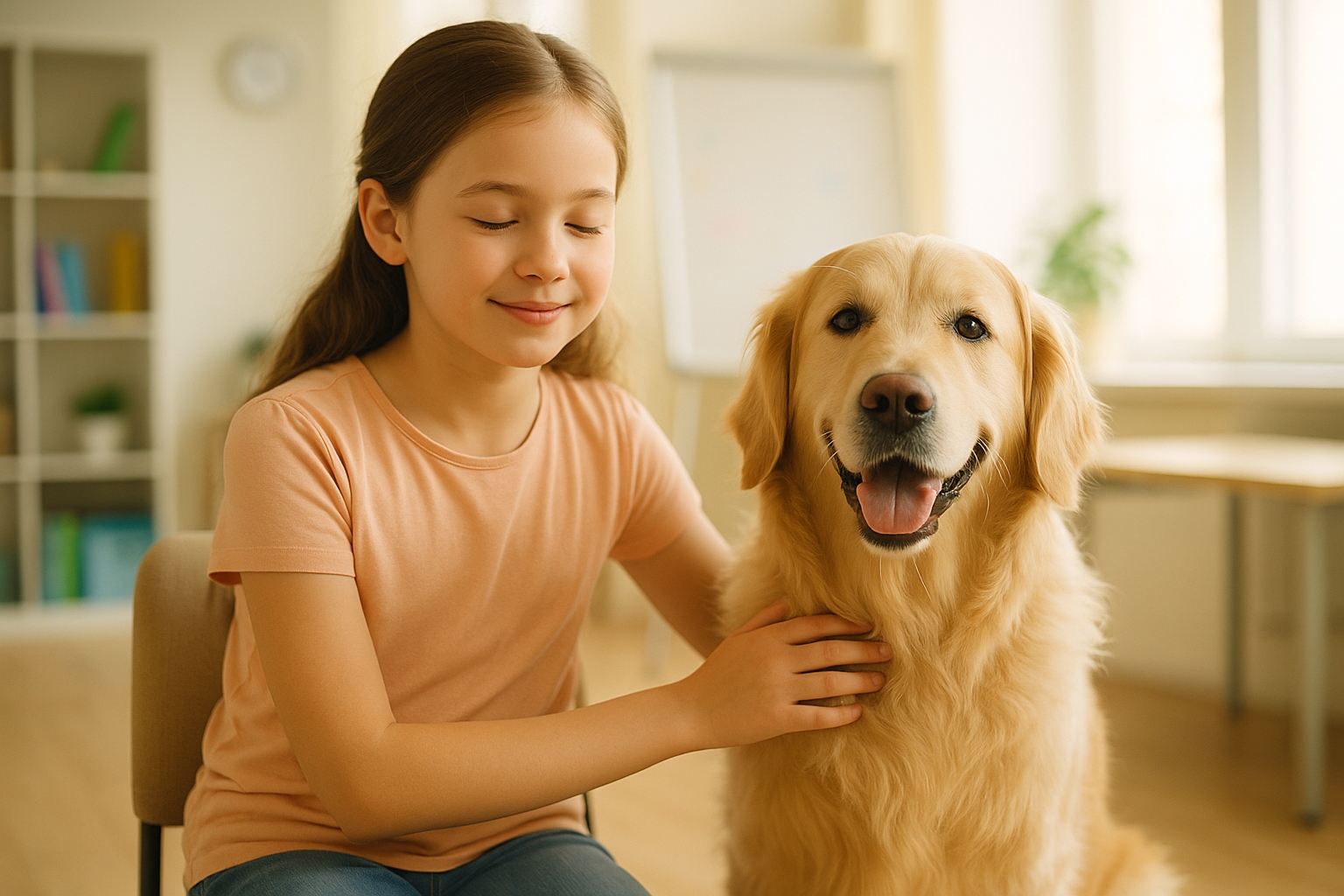
Dogs are masters of body language. They tune into energy, tone and emotion… not just words. This makes them perfect emotional mirrors for children who may struggle with social cues, self-awareness or self-regulation.
Where an adult might ask, “How are you feeling today?” a dog might simply lean in, lie down or wag gently… all saying, “I’m with you. You’re not alone.”
Let’s look at some real-life examples of canine-assisted learning in action.
Leo’s Story: From Panic to Peace
Leo, mentioned earlier, was prone to panic attacks during transitions. Going from the classroom to assembly or from one activity to the next, would send him into full shutdown… heart racing, fists clenched, breathing shallow.
During his sessions with Daisy, however, he was given one job: to hold her lead.
That was it.
No pressure to talk, no forced participation. Just hold the lead while walking around the oval.
Over time, that simple act became a regulation anchor. When Leo felt panic rising, he would automatically start stroking Daisy’s ear. Or gently tug on the lead to feel its weight in his hand. Daisy, ever the calm presence, would match his pace… never rushing, never pulling.
Weeks later, his teacher shared this:
“We had a surprise fire drill. Usually, Leo would lose it. But this time, he asked to hold a skipping rope and pretend it was Daisy’s lead. He walked calmly outside with the class. No meltdown.”
That’s emotional regulation. Not perfection. Not avoidance. Just progress, grounded in connection.
Maya’s Story: Learning to Breathe Again

Maya was 10, full of energy and opinions, with a lightning-fast brain and emotions that went from 0 to 100 in seconds. She’d been labelled “explosive” more times than her mum could count. Diagnosed with ADHD and RSD, Maya often felt misunderstood… and quick to shut down or lash out when corrected.
Enter Harvey, the chocolate Labrador.
In one of her first sessions, Maya was asked, “What do you think Harvey does when he’s excited?”
She giggled. “He wiggles his bum.”
“And when he’s nervous?”
“He hides his tail and licks his lips.”
“Exactly. Dogs show their feelings. And so do we.”
Over the next few sessions, Maya learned to match Harvey’s breathing. They would lie down together, side by side and practice slow, belly breaths. When Maya felt overwhelmed in class, she would visualise Harvey taking deep breaths next to her.
A few months later, during a high-pressure maths test, she quietly asked her teacher, “Can I sit at the back? I need my Harvey space.”
No explosion. No argument. Just a regulated response… from a girl who was learning to understand her emotions, not fear them.
Kye’s Story: From Shut Down to Showing Up
Kye was 11 and had experienced school trauma. He’d been suspended twice for aggressive behaviour and often spent more time in the principal’s office than the classroom. But under the surface, he was grieving, anxious and carrying more than his young body knew how to handle.
He didn’t trust adults.
But he trusted Scout… the calm, quiet kelpie who met him at the gate each week.
Scout didn’t ask Kye questions. He didn’t demand behaviour. He just showed up. Every time. Same tail wag. Same soft eyes.
Kye began opening up… not in words, but in actions. He brushed Scout’s fur. Learned to read his cues. Helped refill his water bowl. And eventually, during one session, whispered:
“I know how Scout feels when he tucks his tail. I do that inside.”
That one sentence broke open a dam of connection. And it was only possible because Scout had modelled vulnerability without pressure. Kye’s emotional regulation wasn’t built through discipline… it was built through relationship.
Why It Works: The Brain Science Behind the Wag
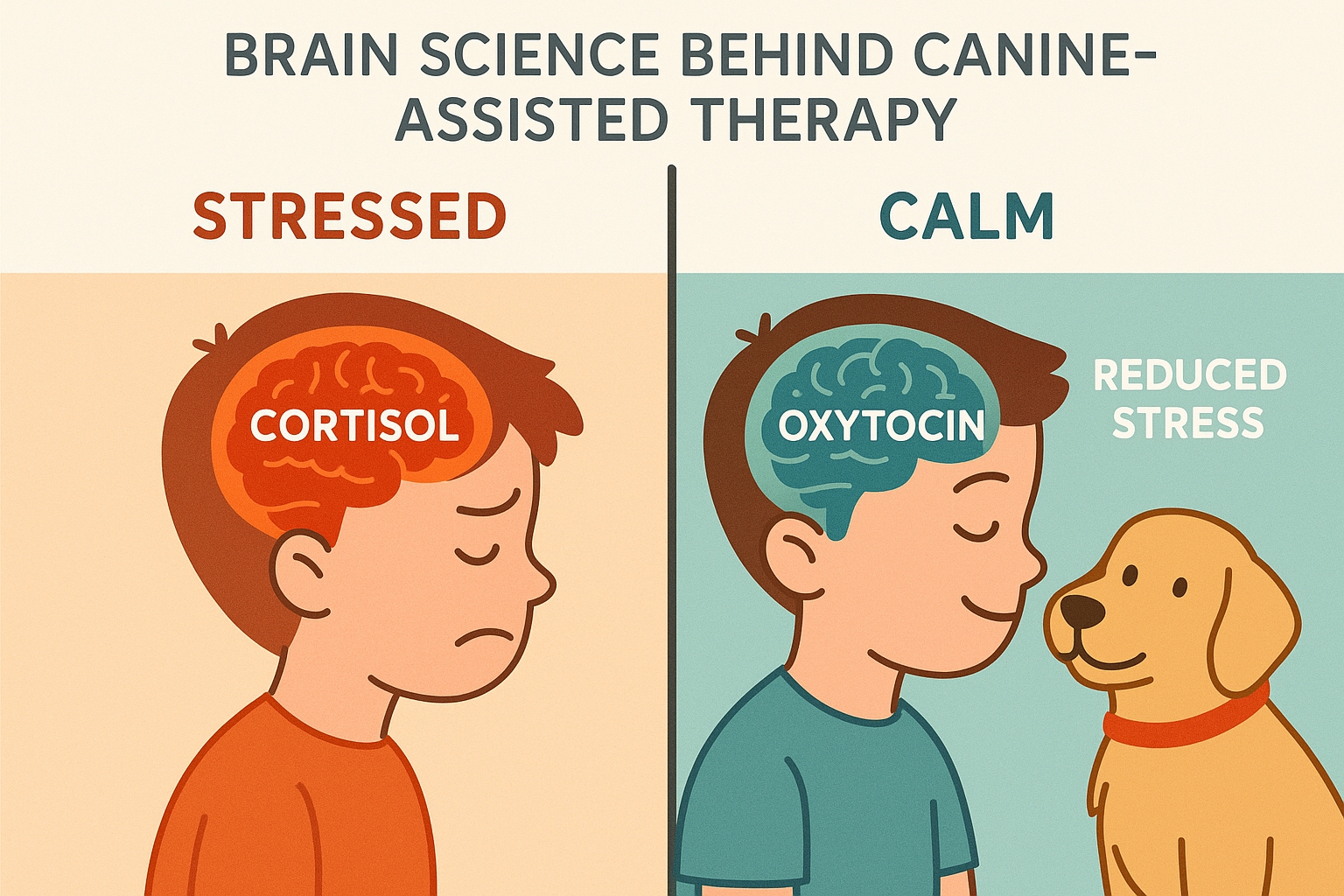
Canine-assisted learning isn’t magic… but it sure feels close. Here’s the science behind it:
Co-Regulation
Dogs help calm the nervous system. Their presence can reduce cortisol (the stress hormone) and increase oxytocin (the bonding hormone). When a child strokes a calm dog, their breathing slows. Their heart rate drops. Their brain shifts from fight-or-flight into rest-and-digest.
Mirror Neurons
Watching a calm dog can actually trigger similar calm responses in the child’s brain. Just seeing the dog lie down, breathe deeply or blink slowly encourages mirroring of that relaxed state.
Non-Verbal Safety
For children with language processing challenges, emotional trauma or social anxiety, verbal support can feel overwhelming. Dogs offer non-verbal emotional safety… something the brain often accepts more easily than words.
What “Success” Really Looks Like
Teaching emotional regulation with dogs doesn’t always look dramatic. Sometimes it’s a meltdown averted. A moment of pause. A child whispering, “I need a break” instead of screaming or running off.
Sometimes it’s a skipped tantrum. Other times, it’s a deep breath before trying again.
Always, it’s progress that’s felt… not forced.
Bringing It Into Your Space
You don’t need a fully trained emotional support dog to bring this work into your home, school or service. Here are some simple ways to build emotional regulation with a paw-pal in the picture:
- Use visual stories about dogs showing emotion (tail down = nervous, barking = overwhelmed)
- Practice deep breathing with a dog beside you
- Create “dog zones” for calm, quiet reset time
- Use a “dog job” as a responsibility anchor (e.g. brushing, water bowl check, toy tidying)
- Incorporate movement breaks that mirror dog behaviour (shaking it off, stretching, wagging, etc.)
Final Woof
Teaching emotional regulation doesn’t always require words, worksheets or willpower.
Sometimes, it begins with a gentle paw, a quiet breath and the kind of trust that only a dog can offer.
In a world where kids are told to “calm down” more often than they’re shown how, canine-assisted learning offers a different path: one grounded in connection, not correction.
Because every child deserves to feel safe in their own body… and sometimes, the first step toward that is made with four paws and a wagging tail.