

Burnout doesn’t usually arrive with sirens blaring or flashing red lights. It creeps in quietly, step by step, until one day you wake up and realise you’ve lost yourself in the grind.
For me, it happened slowly… so slowly I didn’t notice at first. I was a teacher, a carer, a helper. My days were full of responsibilities, expectations and endless to-do lists. I kept showing up, kept giving, kept pushing. But inside, something was unraveling.
The first sign wasn’t dramatic. It was just… tiredness. Not the kind that goes away with a good night’s sleep, but a bone-deep exhaustion that no amount of coffee could fix. Then came the short temper. The forgetfulness. The numbness. The creeping sense of dread each morning.
Looking back now, it was clear: I was in the grip of burnout. And yet, I didn’t see it coming.
What eventually helped me heal wasn’t a self-help book or a meditation app… it was a fur baby named Rosie, with a wagging tail and soft brown eyes, who reminded me how to breathe again.
This is my story, but it’s also the story of so many carers, teachers and support workers who give so much of themselves until there’s nothing left. Let’s talk about the quiet storm of burnout, how to spot it before it consumes you and how emotional support dogs can help us find our way back to purpose and presence.
The Slow Creep of Burnout
Burnout is often described as emotional, physical and mental exhaustion caused by prolonged stress. But those words don’t capture the reality of it.
Burnout feels like:
- Waking up already exhausted
- Losing interest in things you used to love
- Snapping at loved ones over small things
- Feeling numb, detached or hopeless
- Running on autopilot just to survive the day
For carers and educators, burnout often comes wrapped in guilt. We tell ourselves:
- “I should be able to handle this.”
- “Other people have it worse.”
- “If I just push harder, I’ll catch up.”
But pushing harder only digs the hole deeper.
The World Health Organization now recognises burnout as an occupational phenomenon. It’s especially common in people who spend their days caring for others… teachers, support workers, health professionals, parents. When your role is to give and give and give, it’s dangerously easy to forget that you need to receive too.
Signs You Might Be Burning Out
Burnout rarely arrives overnight. It’s sneaky. Here are some of the early signs to watch for:
- Emotional changes: Irritability, cynicism, detachment or sudden tears
- Physical signs: Headaches, stomach problems, frequent illness, insomnia
- Cognitive issues: Forgetfulness, trouble concentrating, brain fog
- Behaviour shifts: Withdrawing from others, procrastinating, avoiding responsibilities
- Loss of joy: Activities that once felt meaningful now feel empty
If you’re nodding along, you’re not alone. And you’re not weak. You’re human.
How a Fur Baby Helped Me Reconnect

At my lowest point, I was on the verge of walking away from everything. Teaching, supporting others, even showing up for family… it all felt too heavy.
Then Rosie padded into my life. She wasn’t a miracle cure. But she was consistent, present and entirely free of judgement.
Here’s how working alongside Rosie helped me find my way back:
1. Routine Became Gentle, Not Rigid
Burnout had made every task feel like climbing a mountain. Even simple things… like cooking dinner or answering emails… were overwhelming. But Rosie needed daily walks, meals and playtime.
Her needs gave me structure without pressure. Walking her each morning wasn’t a chore… it was a gift. I got fresh air, movement and a chance to feel the ground beneath my feet.
2. Presence Replaced Numbness
Burnout had numbed me to the world. But when I stroked Rosie’s fur or watched her chase butterflies, I felt something stir again. She lived entirely in the moment. And slowly, she taught me to do the same.
When I was with her, I wasn’t replaying yesterday’s failures or dreading tomorrow’s demands. I was here. Now.
3. Connection Without Demands
Humans can be complicated. Conversations come with expectations, questions and hidden pressures. With Rosie, there were no conditions. I didn’t have to explain why I was struggling. She didn’t need me to perform.
She simply leaned against me, breathed slowly and reminded me: you’re not alone.
4. Oxytocin Reset My Nervous System
Science backs this up. When we interact with dogs, our bodies release oxytocin, the “bonding hormone.” At the same time, levels of cortisol, the stress hormone, drop.
This isn’t just “feel-good fluff.” It’s neurobiology. And for someone drowning in stress, those hormonal shifts are life rafts.
5. Purpose, Rediscovered
Burnout had stolen my sense of purpose. But caring for Rosie reminded me of my own capacity for empathy and love. Eventually, I began to feel ready to extend that same care back out into the world… first in small ways, then more fully.
Rosie helped me remember who I was beyond the exhaustion.
Why Dogs Work So Well for Carers and Educators
Teachers, support workers and carers are especially vulnerable to burnout because they’re constantly navigating other people’s emotions. That emotional labour takes a toll.
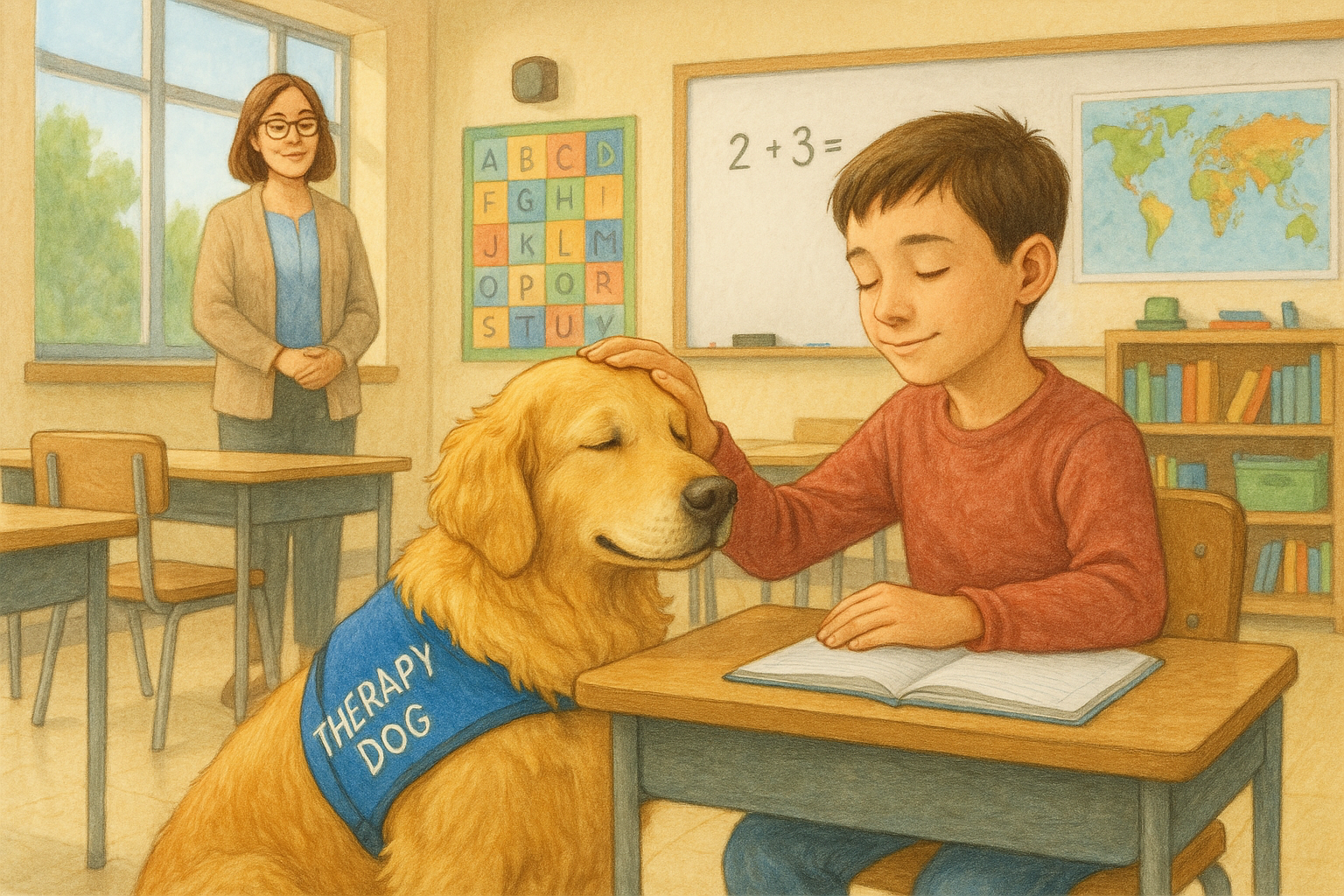
Dogs create what psychologists call a co-regulation effect. Their calm presence helps regulate our nervous systems. When a teacher strokes the school’s emotional support dog between classes or when a carer walks alongside a paw-pal after a tough shift, their brain chemistry shifts from survival mode to rest mode.
And unlike humans, dogs don’t judge. They don’t ask you to justify your tiredness. They don’t expect you to be “on.” They just be… and that’s exactly what many of us need.
Rebuilding From Burnout: What I Learned
Rosie didn’t erase my burnout. Recovery took time, boundaries and real change. But she was the catalyst that reminded me healing was possible. Here are some lessons I carry forward:
- Rest isn’t earned… it’s essential. Waiting until you “deserve” rest only guarantees collapse.
- Notice the small signals. Irritability, headaches or forgetfulness aren’t just quirks… they’re warnings.
- Presence heals. Even five minutes of mindful connection… with a dog, with nature or with your breath… can reset your nervous system.
- Boundaries are lifesavers. Saying “no” isn’t selfish… it’s survival.
- Connection beats perfection. True recovery isn’t about doing everything “right.” It’s about feeling safe, seen and supported.
Bringing Emotional Support Dogs Into Schools and Support Settings
Imagine this: a classroom buzzing with noise, a student on the edge of meltdown, a teacher stretched thin. In the corner lies a calm, steady dog. The student kneels beside them, stroking fur, breathing slowing, shoulders softening. The storm passes.
Or picture a support worker finishing a long, draining shift. Instead of collapsing into exhaustion, they take five minutes to walk with their program’s emotional support dog. The rhythm of paws on the ground brings their nervous system back into balance.
These aren’t daydreams… they’re happening in schools and community programs across Australia right now. Emotional support dogs help:
- Reduce anxiety in students and staff
- Increase emotional resilience
- Model regulation behaviours
- Offer unconditional connection when humans feel spent
For carers, teachers and support workers, working alongside a dog isn’t just about helping others… it’s also about protecting their own well-being.
Final Woof
Burnout can steal so much… energy, joy, hope. But it doesn’t have to steal you.
For me, Rosie was the bridge back to myself. Her wagging tail, quiet presence and unconditional love reminded me that healing is possible, even when the world feels heavy.
If you’re a carer, teacher or support worker who feels the creep of burnout, please hear this: You are not weak. You are not failing. You are human.
And sometimes, the best medicine isn’t another meeting or another self-help checklist. Sometimes, it’s a warm paw on your lap, a steady heartbeat beside you and the reminder that you are safe, loved and never truly alone.
Because sometimes, the way back to purpose and presence is found… one wag at a time. 🐾