
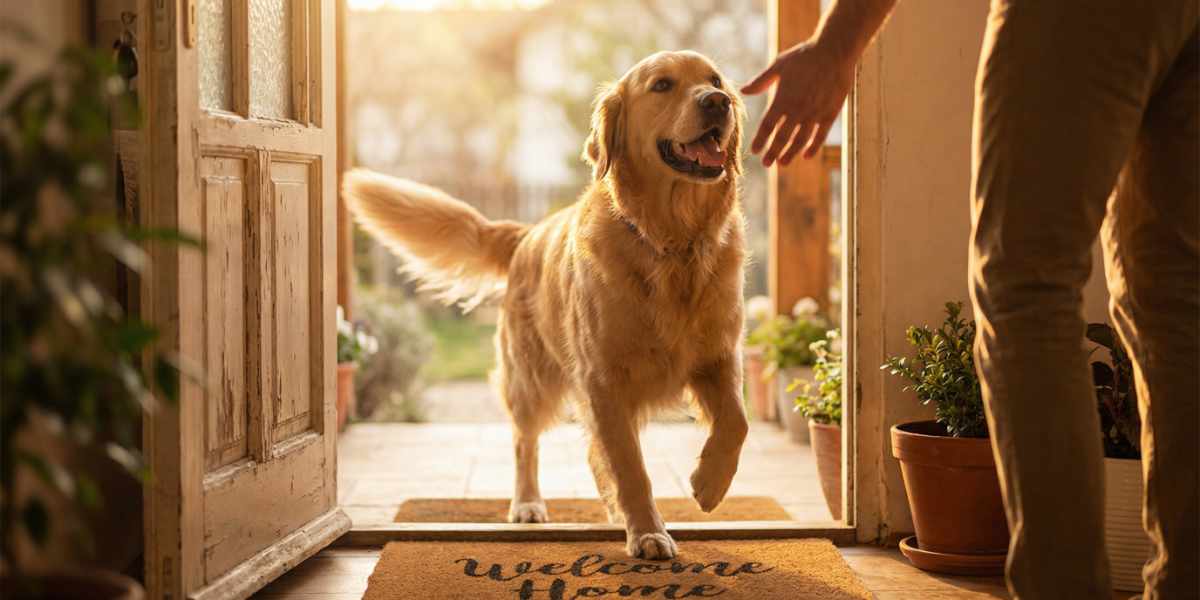
Have you ever walked through the door after a long day, feeling the weight of the world on your shoulders, only to be greeted by a furiously wagging tail, a happy dance, and a warm nuzzle that seems to say, “I’m so glad you’re home”? In that small, simple moment, our four-legged friends offer a powerful lesson in connection. They don’t ask about your day, they don’t offer complicated advice, and they certainly don’t check their phones while you’re talking. They just see you, and they react with pure, uncomplicated joy. This, in its own wonderfully simple way, is a masterclass in what we humans call emotional intelligence.
Emotional intelligence, often shortened to EQ, might sound like a complex topic you’d find in a psychology textbook, but it’s really about how we understand and manage our own feelings, and how we recognise and influence the feelings of those around us. It’s the glue that holds our relationships together, helping us navigate the tricky, wonderful, and sometimes messy world of human connection. It’s what allows us to be a good friend, a supportive colleague, and a loving family member. And who better to be our guides on this journey of discovery than our dogs? They are absolute experts in living in the moment, reading the room, and showing they care. By breaking down emotional intelligence into a few key, easy-to-understand pieces, we can see how our paw-pals are not just our best friends, but also our wisest and furriest teachers in the art of being emotionally smart.
The Honest Sniff Test: A Lesson in Self-Awareness
Before we can truly understand anyone else, we have to start with ourselves. This is the very first building block of emotional intelligence: self-awareness. It’s about having a clear understanding of what you’re feeling and why you’re feeling it. It’s also about recognising your own strengths, your weaknesses, and what makes you tick. Think of it as your own internal weather report. Are you feeling sunny and bright today, or are there a few storm clouds brewing on the horizon? Being self-aware means you can notice those clouds before the rain starts pouring.
Dogs are brilliant at this. They are wonderfully, refreshingly in tune with their own needs and feelings. A dog doesn’t pretend it’s not scared when a loud clap of thunder shakes the house. It will seek comfort, perhaps by hiding under a table, trembling, or nudging its owner for a reassuring pat. It doesn’t try to “tough it out” or tell itself that it’s being silly. It acknowledges the feeling of fear and instinctively acts on it. This isn’t a sign of weakness; it’s a sign of being honestly and openly aware of its emotional state. It’s a raw, unfiltered honesty that we humans often lose as we grow up.
We can learn so much from this simple honesty. How often do we humans push down our feelings or pretend they don’t exist? We might feel a wave of anxiety before a big presentation and tell ourselves to “just get over it.” Or we might feel a pang of sadness and immediately distract ourselves with our phones, scrolling endlessly instead of sitting with the feeling and asking, “Hello, sadness. What’s this feeling about?” Being self-aware doesn’t mean letting our feelings run the show and dictate our every move. It just means being honest enough to acknowledge them. It’s about giving yourself an “honest sniff test” and recognising what’s really going on inside. Just as a dog knows when it needs a drink of water, a good stretch, or a run in the park, we can learn to recognise when we need a moment of quiet, a chat with a trusted friend, or a bit of comfort.
Self-awareness for a dog also extends to knowing its own limits and energy levels. A young, energetic Border Collie knows it needs to run, and it will often bring you a ball or pace by the door to let you know it’s time for action. An older, wiser Golden Retriever, on the other hand, knows when it’s had enough and will find a comfy spot to nap, even if the world around it is busy. They listen to their bodies. In the same way, human self-awareness involves knowing our own boundaries. It’s about knowing when to say “yes” to a new challenge that excites us and when to say “no” to something that might stretch us too thin. It’s about understanding that our social and emotional energy is a finite resource, and we need to manage it wisely. By watching our dogs, we’re reminded that being in tune with ourselves is the first, most crucial step to navigating the world with confidence and calm.
The “Stay” Command for Feelings: A Guide to Self-Regulation
Once you’re aware of your feelings, what do you do with them? This is where the next important piece of the EQ puzzle comes in: self-regulation. This is the ability to manage your emotions and impulses in a healthy way. It’s the difference between feeling a surge of anger and immediately lashing out, versus feeling that same anger and choosing to take a few deep breaths before you respond. It’s not about suppressing your feelings or pretending you’re a robot. It’s about being the boss of how you express them.
Think about the classic “stay” or “leave it” command in dog training. You can put a delicious, tempting treat right in front of a well-trained dog, and with that simple command, it will wait patiently. Its every instinct might be screaming, “Eat the treat! Eat it now!” but it has learned to manage that powerful impulse. This is a perfect picture of self-regulation in action. The dog feels the desire, it acknowledges the desire, but it chooses not to act on it immediately. It’s a skill that requires practice, patience, and a lot of positive reinforcement… for both dogs and people.
Another wonderful example from the canine world is the “shake off.” Have you ever seen a dog have a stressful encounter at the park, maybe a little bark-off with another dog that got a bit too close? Often, once the moment has passed and the other dog has moved on, the dog will literally shake its whole body, from nose to tail. Vets and animal behaviourists believe this is a physical mechanism for releasing the stress and tension from the experience. It’s like hitting a reset button. The dog isn’t holding onto a grudge or replaying the argument in its head for the next hour. It shakes it off and moves on with its day.
What a powerful lesson for us. We humans have a tendency to hold onto stress. We might have a difficult conversation at work and carry that negative energy with us for the rest of the day, snapping at our family later. We might get stuck in traffic and let that frustration colour our entire evening. What if we could learn to “shake it off”? Of course, we might look a bit silly physically shaking in the middle of the office, but we can find our own ways to hit that reset button. This could be going for a short walk around the block, putting on a favourite song and singing along, or simply taking five minutes to close our eyes and focus on our breath. Self-regulation is about building that little bit of space between a feeling and a reaction. It’s about learning to press pause, just like a dog waiting for the “okay” to take its treat. It’s a skill that gives us control not over what we feel, but over what we do with that feeling, and it’s the key to responding to life’s challenges thoughtfully instead of reactively.

The Nuzzle That Says “I Get It”: A Masterclass in Empathy
Emotional intelligence isn’t just about our own internal world. It’s also about our ability to connect with others in a meaningful way. This brings us to the third, and perhaps most heart-warming, component of EQ: empathy. Empathy is the ability to understand and share the feelings of another person. It’s about trying to put yourself in their shoes and see the world from their perspective. It’s the foundation of kindness, compassion, and true, lasting connection.
If you’re a dog owner, you have almost certainly experienced the profound, unspoken empathy of a canine companion. They seem to have a sixth sense for our emotions. When you’re crying, a dog won’t offer you tissues, tell you to cheer up, or try to solve your problems with unsolicited advice. Instead, it might gently rest its head on your lap, give your hand a soft lick, or simply curl up beside you. This is a pure, unfiltered empathetic response. The dog senses your distress, and its instinct is to offer comfort and presence. It doesn’t try to fix the problem; it simply shares the moment with you, letting you know that you are not alone in your sadness. Its presence says, “I’m here with you, and I get it.”
This ability to “read the room” is something dogs do incredibly well. A playful, boisterous dog can learn to be gentle and calm around a frail elderly person or a small child. It adjusts its behaviour based on the emotional and physical cues it receives from the other being. This is a sophisticated social skill. The dog is tuning into the needs of someone else and changing its own actions to make them feel safe and comfortable. It’s not thinking about itself; it’s thinking about the other person. Scientists believe that when we interact with dogs, both our brains and theirs release oxytocin, the “love hormone,” which helps to build this incredible bond of trust and understanding.
For us humans, empathy can sometimes get complicated. We might be so busy trying to find the “right” thing to say or the perfect solution that we forget the most powerful thing we can do is simply listen and be present. A dog’s gentle nuzzle is a powerful reminder that empathy isn’t always about having the answers. It’s about showing up. It’s about offering a quiet, non-judgmental presence that creates a safe space for someone to feel their feelings. Practising empathy in our own lives means making a genuine effort to understand the perspectives of others, even when we don’t agree with them. It means listening more than we talk. It means paying attention to the non-verbal cues… the tone of voice, the body language, the look in someone’s eyes… that tell us how they are really feeling. Just as a dog listens with its whole body, we can learn to listen with our whole heart.
The Dog Park Diplomat: Putting It All Together
Imagine a well-socialised dog at a busy dog park. This dog is the ultimate emotional intelligence expert, a true four-legged diplomat. It enters the park and doesn’t just bound in blindly. It takes a moment to stand by the gate, observe the scene, sniff the air, and watch the other dogs. That’s its self-awareness in action, as it assesses the environment and its own feelings before diving in.
It sees a group of big dogs playing a wild, rough-and-tumble game of chase. Instead of rushing in and potentially causing chaos or getting overwhelmed, it might approach slowly, with a friendly, cautiously wagging tail. It might even do a “play bow”… that universal dog signal for “I’m friendly and I want to play!” This is its self-regulation at work. It’s managing its own excitement and using appropriate social skills to politely ask to join the group.
As it plays, it notices a smaller, more timid dog hiding behind its owner’s legs, looking nervous. The diplomat dog doesn’t try to force the timid dog to play. It doesn’t bark in its face or try to initiate a chase. Instead, it might give the little dog a wide berth, or perhaps offer a single, gentle, curious sniff before moving on, signalling that it is not a threat. This is its empathy in action. It recognises the other dog’s fear and adjusts its own behaviour to help that dog feel safe.
This dog park diplomat is a beautiful, living illustration of how the pieces of emotional intelligence work together in harmony. Self-awareness provides the information (“I’m excited, but that’s a bit chaotic over there”). Self-regulation manages the response (“I’ll approach slowly instead of charging in”). And empathy connects to others (“That little dog is scared, so I’ll give it some space”). A dog that has mastered these skills can navigate its social world with ease and grace, creating positive interactions and avoiding unnecessary conflict.
We can strive to be the human equivalent of the dog park diplomat in our own lives. At work, at school, at home, and in our communities, we can use our EQ to build stronger, healthier relationships and create a more positive environment for everyone. It starts with checking in with ourselves (self-awareness), thinking before we speak or act (self-regulation), and making a genuine effort to understand the feelings of those around us (empathy).
Our dogs, with their wagging tails, wet noses, and endlessly open hearts, show us that emotional intelligence isn’t about being perfect or never having negative feelings. It’s about being honest, present, and kind… to ourselves and to others. It’s about learning to navigate the beautiful, complicated dance of life with a bit more understanding and a lot more heart. The next time your dog greets you at the door, or rests its head on your lap while you’re watching TV, take a moment to appreciate the profound lesson they are offering. It’s a lesson in connection, a lesson in joy, and a lesson in the simple, powerful wisdom of a wagging tail.