

We’ve all had those moments… your child suddenly explodes over a small request, bursts into tears for “no reason” or refuses to follow simple instructions. It can feel frustrating, exhausting and confusing. You might hear well-meaning advice like, “They need more discipline,” or “They’re just being naughty.”
But what if we told you that what looks like misbehaviour is often something much deeper?
In many cases, your child isn’t being difficult… they’re dysregulated.
And the best part? Our emotional support dogs are here to show us exactly what that means… and how we can help.
What Is Emotional Dysregulation?
Emotional dysregulation means a person struggles to manage their emotional responses. This can look like:
- Big reactions to small problems
- Trouble calming down after getting upset
- Sudden outbursts of anger, fear or sadness
- Withdrawal or shutdown when overwhelmed
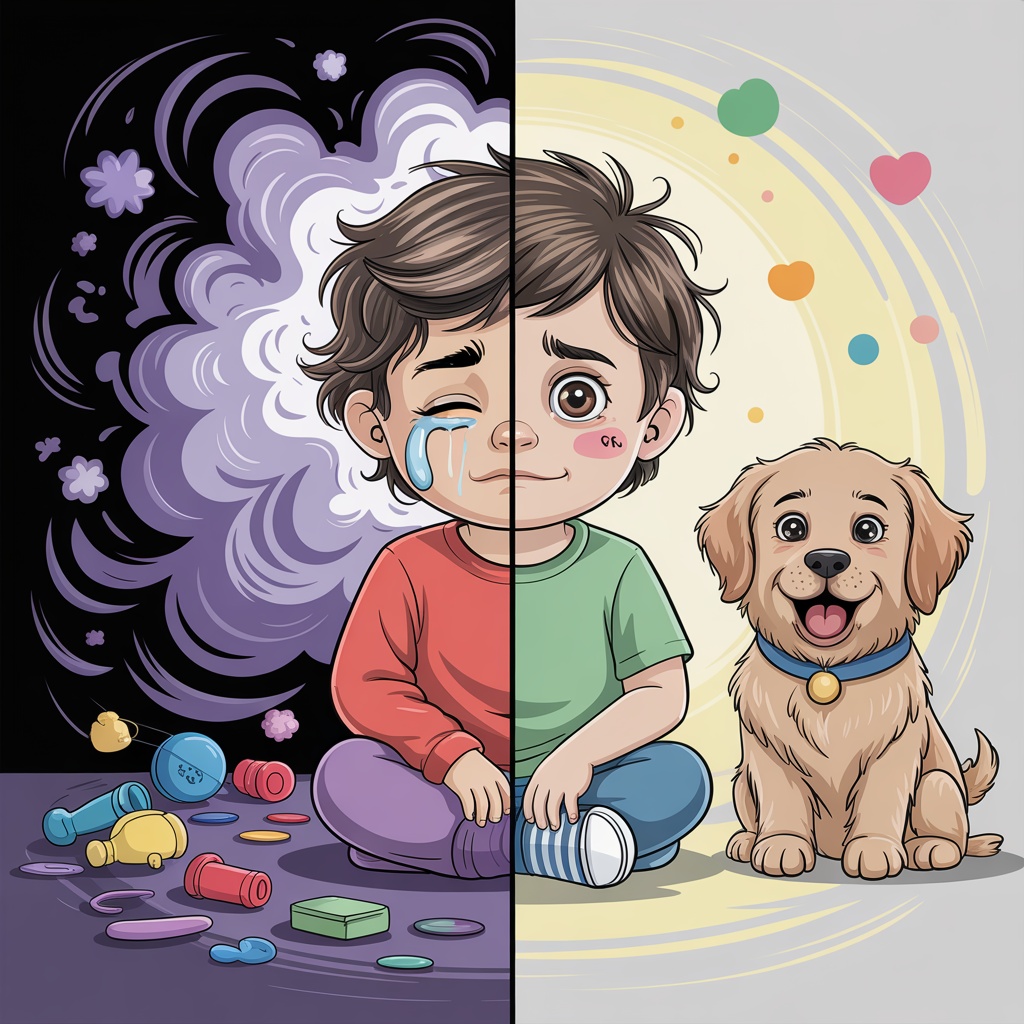
For children… especially those who are neurodivergent (like those with ADHD, autism or sensory processing challenges)… emotional dysregulation isn’t a choice. It’s a nervous system response, not a behaviour problem.
Their brains are working hard just to process what’s happening around them. If something becomes too much… too loud, too fast, too confusing… their body kicks into “survival mode”.
This is where the magic of understanding begins.
Imagine This: A Dog in Panic Mode
Let’s take a moment to think about dogs.
Say your pup hears fireworks. They tremble, hide, bark or maybe even have an accident inside. Are they being “bad”?
Of course not.
They’re scared. Their body is reacting to a perceived danger. They’re dysregulated.
We don’t shout at them or send them to their room. We comfort them. We lower the lights. We speak softly. Maybe we sit close, give them gentle pats or offer their favourite blanket.
We co-regulate… we help them calm down by staying calm ourselves.
Now… what if we treated our kids the same way?
“Naughty” vs. “Not Yet Regulated”
Here’s the truth: Many behaviours we label as “naughty” are really signs of a dysregulated nervous system.
Your child who screams when told to put their shoes on?
They might be overwhelmed by transitions.
The one who can’t sit still at school?
Their body might need movement to feel safe and focused.
The teen who snaps at you after school?
They’ve probably been “masking” all day to fit in… and now their brain is fried.
When we shift from asking “What’s wrong with them?” to “What’s happening inside them?”, everything changes.
What Dogs Teach Us About Regulation
Our emotional support dogs are incredible teachers.
They don’t speak in words, but they communicate constantly… through body language, energy and emotion. And they remind us:
- Regulation comes before learning.
- Connection comes before correction.
- Safety comes before success.
Just like kids, dogs need to feel safe to feel settled. If a pup is scared or overwhelmed, they won’t respond to training cues. You wouldn’t ask a panicked dog to sit and stay. You’d help them feel calm first.
So why do we expect children to “just behave” when their brain is in panic mode?
When a child is dysregulated, their thinking brain (prefrontal cortex) goes offline. Logic, listening, learning… all of it pauses. The body says: “First, I need to feel safe.”
The Power of Co-Regulation (With a Fur Baby’s Help)
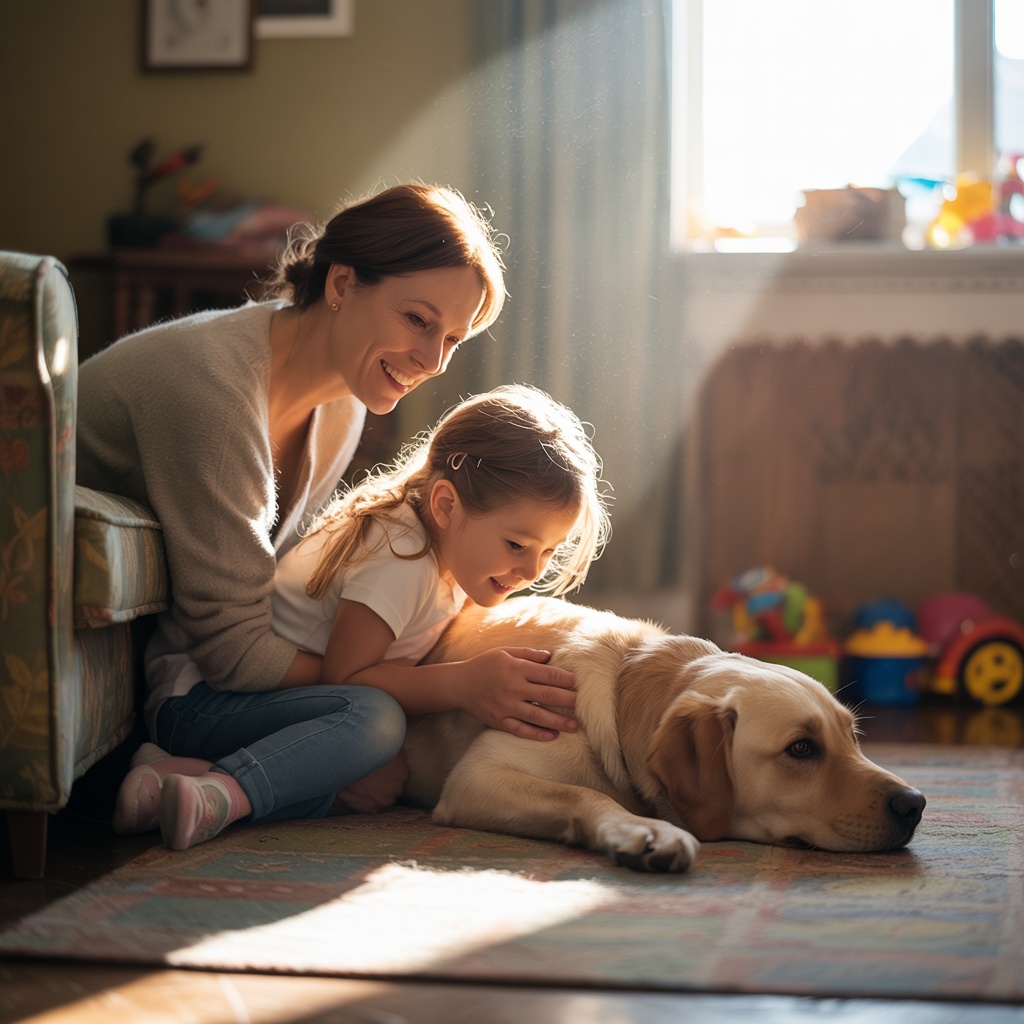
Co-regulation is when a child borrows your calm to find their own.
You don’t need to “fix” their emotions. You just need to be their safe anchor.
Here’s where our four-legged friends work their magic. Emotional support dogs:
- Help children feel seen and accepted
- Offer non-judgemental companionship
- Provide physical comfort (like pats, pressure or leaning in)
- Model calm breathing and steady energy
- Encourage mindfulness through stroking, grooming or walking
A dog’s presence activates oxytocin… the “love hormone”… which lowers stress and helps regulate the nervous system. Simply petting a pup can slow breathing, reduce cortisol and help a child return to a calmer state.
That’s not just cute. That’s neuroscience.
Spot the Signs: Is My Child Dysregulated?
Here are some common signs your child might be dysregulated… not disobedient:
- Yelling or slamming doors
- Meltdowns after school
- Shutting down or going silent
- Clinginess or separation anxiety
- Avoiding tasks or appearing “lazy”
- Fidgeting, pacing or restlessness
- Difficulty sleeping or eating
These are not signs of a bad attitude. They are SOS signals from a nervous system that needs support.
Practical Tools You Can Try at Home
Helping your child regulate doesn’t require fancy programs. Just start with connection, compassion and a few practical strategies:
1. Use a Calm Voice, Even When They Can’t
Your calm tone can act like a grounding rope. It tells their body: “You’re safe here.”
2. Offer Physical Comfort
A soft blanket, a warm hug or time with a furry friend can do wonders.
3. Create a Regulation Corner
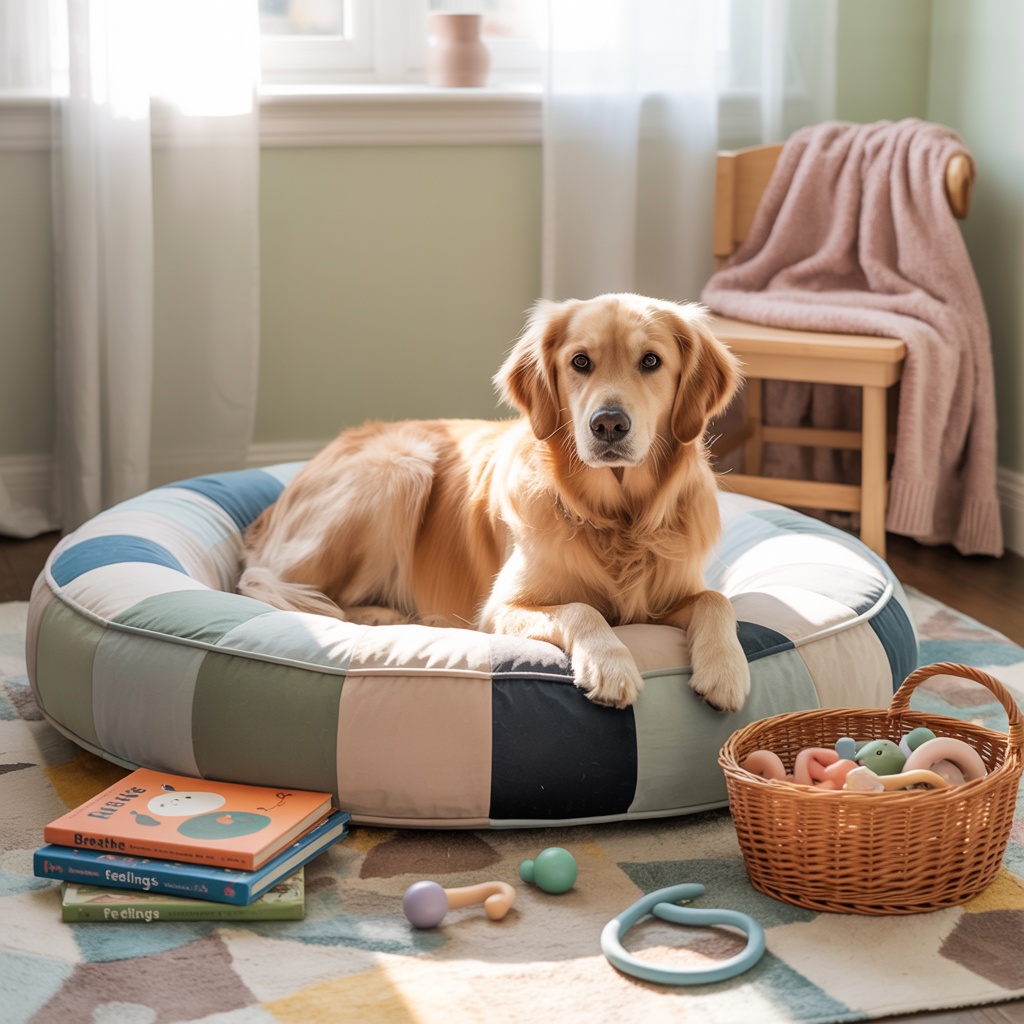
Set up a cosy space with fidget tools, calming visuals, soft lighting and a spot for your pup to sit beside them.
4. Name the Feeling
Help them build emotional literacy: “It looks like your body’s feeling overwhelmed. Do you want to sit with [dog’s name] for a bit?”
5. Regulate Together
Breathe deeply together. Stroke the dog’s fur slowly. Take a slow walk. Mirror the energy you want them to find.
6. Plan for Recovery Time
Don’t expect kids to bounce back quickly. Just like dogs need time to recover after a stressful event, so do children.
Real Stories, Real Change
We’ve seen it time and again in our canine-assisted programs:
- A child who once struggled with classroom meltdowns now finds comfort in brushing her paw-pal during transitions.
- A boy with extreme school anxiety begins each day by walking with his emotional support dog… and slowly finds his voice again.
- A teen who avoids group activities feels safe participating when his dog is there beside him.
When a child is seen, accepted and supported, their world opens up. And often, the first one to offer that acceptance… is a dog.
Final Bark of Wisdom
Next time your child “acts out,” try this:
Pause. Breathe. Ask yourself:
👉 “What would I do if this were my dog, not my child?”
Would you yell? Or would you comfort?
Would you punish? Or would you check in?
Our fur babies remind us that behaviour is communication. That nervous systems need safety. And that love, patience and connection go much further than control ever will.
Because behind every big reaction is a child who’s doing the best they can with what their brain and body are able to manage.
And sometimes, all they need… is someone to sit beside them.
Someone calm. Someone kind.
Someone with soft fur and a wagging tail.