
Some kids walk into the room with their shoulders up around their ears.
They scan every corner. They grip their bag a little too tightly. Their answers come out quiet, or not at all.
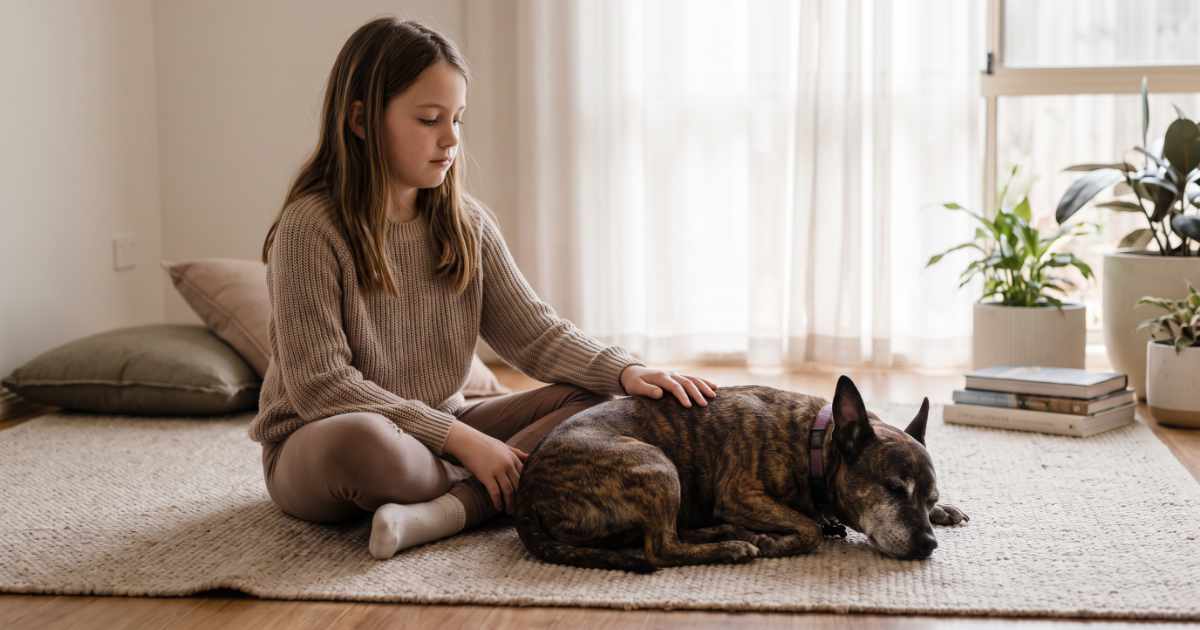
Ten minutes later, they’re sitting on the floor, one hand resting on the back of Raine, our gentle staffy, breathing a little slower.
It’s a small change. But for an anxious child, it can be the difference between shutting down and having a go.
When anxiety gets in the way of learning
Anxiety is one of the most common challenges children and teens face, and it can show up at school in all sorts of ways:
- Stomach aches or headaches before school
- Avoiding answering questions or reading aloud
- Freezing during tests or new tasks
- Struggling to concentrate
- Withdrawing from group work or friendships
- Not wanting to go to school at all
When a child is anxious, their body is on high alert. Energy that could go into thinking, remembering and creating is busy scanning for threats instead. It’s very hard to learn when you don’t feel safe.
What a calm dog brings into the room
A sense of safety. A relaxed, friendly dog can signal that this space is ok. Many children find their guard lowers when a gentle dog is nearby.
Something to focus on. Patting, brushing or simply watching a dog gives anxious minds a calm, grounding focus in the present moment.
Gentle touch. Stroking a soft coat can be soothing. For many kids, it’s one of the quickest ways to feel more settled.
No pressure to perform. A dog doesn’t expect the right answer. Kids can be themselves without worrying about getting it wrong.
A bridge to connection. Dogs are natural conversation starters. A child who won’t talk about themselves will often happily talk about the dog, and that can open the door to talking about other things.
Calm really can be contagious
You’ve probably felt it yourself. Sitting next to someone calm helps you feel calmer. Sitting next to someone tense puts you on edge.
A well-trained, steady dog brings that calm with it. When a child spends time with a dog that’s relaxed, predictable and gentle, they often begin to mirror that state. Their breathing slows. Their body softens. And from that calmer place, learning becomes possible again.
What it can look like in a session
In a canine-assisted learning session for anxious students, the focus is on safety and choice. A child might:
- Start by simply observing the dog from a comfortable distance
- Choose when and how to say hello, if at all
- Practise calm breathing alongside the dog, noticing how slowly the dog breathes when resting
- Read, draw or complete a task with the dog nearby
- Learn to read the dog’s body language, building awareness of their own feelings in the process
Each session moves at the child’s pace, and the dogs set a pretty relaxed one. Cookie, our chocolate labrador, is often happy to settle into a slow-breathing snooze, which makes the perfect model for calm breathing practice. There’s no pressure to touch the dog or participate in any way that feels uncomfortable.
Important to know
A dog isn’t a cure for anxiety. Canine-assisted learning can be a valuable support, but it works best alongside other help where needed, such as your GP, a psychologist, or your school’s wellbeing team.
If your child’s anxiety is affecting their sleep, eating, friendships or school attendance, it’s worth speaking with your GP about extra support.
Helping your anxious child at home
- Acknowledge their feelings without rushing to fix them
- Keep routines predictable, especially around school mornings
- Practise calming strategies when they’re relaxed, so they’re easier to use when anxious
- Celebrate brave moments, however small
- Give them time with animals if they enjoy it, whether that’s your family pet or a friend’s calm dog
A steady presence makes room for courage
Anxious kids don’t need to be pushed. They need to feel safe enough to try.
Sometimes, all it takes is a steady, gentle dog lying quietly nearby, reminding them that this moment is ok, and that they’re ok too.
New to canine-assisted learning? Start with our guide: what is canine-assisted learning (and what it isn’t).