
You can tell a teenager about patience, empathy and responsibility a hundred times.
Or you can hand them a lead and watch them learn it in an afternoon.
Most parents know the frustration of a message that just won’t land. The more you explain, the more your teen tunes out. It’s not that they don’t care. It’s that teenagers, like most of us, learn best through experience, not instruction.
And when it comes to real-world experience, few teachers are as effective, or as patient, as a dog.
Why lectures don’t stick
Teenagers are working hard to become independent thinkers. Being told what to do, even when it’s good advice, can trigger resistance. Lectures can feel like control, and control is exactly what many teens are pushing against.
Experience is different. When a teen discovers something for themselves, they own it. It becomes part of who they are, not just something an adult said.
What a dog can teach
Empathy. Dogs can’t explain how they feel. To work well with a dog, teens need to watch closely, notice body language and think about what the dog might need. That’s empathy in action, and it carries over into how they read the people around them.
Patience. Dogs learn at their own pace. A teen trying to teach a new skill quickly discovers that frustration gets them nowhere, but calm repetition does. There’s no shortcut and no arguing with the results.
Clear communication. Dogs respond to consistent words, gentle tone and confident body language. Teens learn that how they say something matters as much as what they say.
Responsibility. Feeding, walking, grooming and caring for a dog are non-negotiable. A dog relies on you, every day. That kind of responsibility feels very different from a chore chart.
Self-regulation. Dogs pick up on our energy. A teen who is stressed or agitated often finds the dog becomes unsettled too. Learning to calm themselves to help the dog is a powerful lesson in managing emotions.
Confidence. Successfully teaching a dog a new trick or completing a task together builds real, earned confidence. It’s proof that they’re capable, and teens need that proof.
Learning by doing
In canine-assisted learning sessions for teens, these skills are built through hands-on activities rather than talk. At Paws 4 Change, that often means working with Buddy, our border collie, who loves nothing more than learning something new. A session might involve:
- Learning to read canine body language and discussing what the dog might be feeling
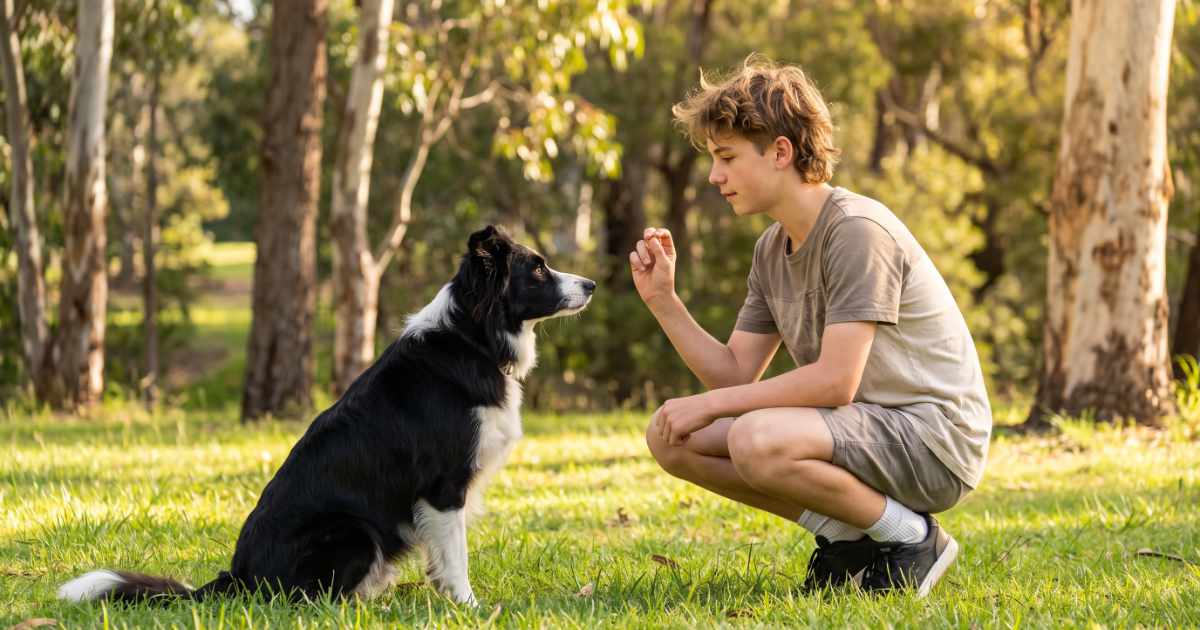
- Teaching the dog a new cue using positive, patient methods
- Planning and leading a short activity with the dog
- Reflecting afterwards on what worked, what didn’t and why
That reflection is where the magic happens. A conversation about why Buddy didn’t respond when they were frustrated can quickly become a conversation about relationships, stress and communication in their own life, without it ever feeling like a lecture.
Why it works so well for teens
- It’s real. The feedback is immediate and honest. A dog either responds or it doesn’t.
- It’s not about them. The focus is on the dog, which takes the spotlight off the teen and makes it easier to try, fail and try again.
- It’s respectful. Teens are trusted with real responsibility, which many crave but rarely get.
- It’s enjoyable. When learning is fun, teens show up and engage.
Try this at home
If you have a family dog, you can build on these ideas:
- Give your teen ownership of one part of the dog’s care, like the evening walk or training a new trick
- Ask questions instead of giving instructions: “What do you think she’s trying to tell you?”
- Notice and name what you see: “You were really patient with him today. That made a difference.”
- Let them teach you something about the dog
The best teachers don’t lecture
The lessons that stay with us for life are rarely the ones we were told. They’re the ones we lived.
A dog won’t nag your teenager about patience or kindness. It’ll simply give them the chance to practise it, again and again, until it becomes part of who they are.
Curious how it all works? Read what is canine-assisted learning (and what it isn’t) and why connection works better than correction with teens.