
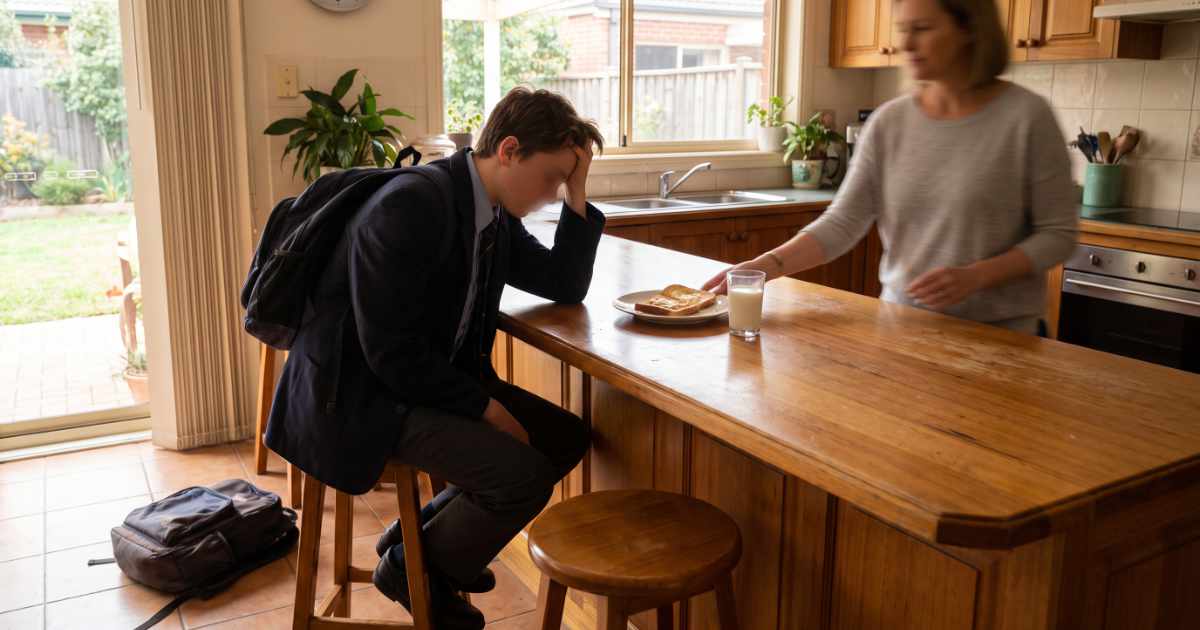
Their teachers say they’re polite, focused and a joy to have in class.
So why do they walk through your front door and explode?
A simple “How was your day?” gets a snap. A reminder about their lunchbox triggers tears. A sibling breathing too loudly starts World War Three.
If this is the 3.30pm routine at your place, you’re not imagining it, and you’re not doing anything wrong. The after-school meltdown is incredibly common, and once you understand what’s driving it, it gets a whole lot easier to handle.
Why teens hold it together all day
School asks a lot of teenagers. For six or seven hours they’re following rules, managing friendships, handling pressure, sitting still, staying quiet and working hard to look like they’ve got it all under control.
That takes enormous energy. Many teens spend the entire day masking their stress, embarrassment, boredom or anxiety so nobody at school sees them struggle.
By the time they get home, their tank is empty.
Why it all comes out with you
Home is where they can finally stop performing. And you are the person they feel safest with.
That means all the feelings they held in at school come out with you: the frustration from a hard maths test, the hurt from being left out at lunch, the exhaustion of being “on” all day.
It’s not fun to be on the receiving end. But it’s a sign of trust. Your teen knows you’ll still love them when they’re at their worst.
Common triggers in the after-school window
- Hunger. Many teens barely eat at school. Low blood sugar plus a long day is a recipe for a short fuse.
- Questions too soon. Even well-meaning questions can feel like more demands on an empty tank.
- Instant jobs. “Unpack your bag, start your homework, feed the dog” before they’ve even put their shoes down.
- Social fallout. Something happened with friends and they’re still processing it.
- Sensory overload. Noisy classrooms, crowded corridors and a loud bus ride can leave them frazzled.
The first 30 minutes: a decompression plan
The best thing you can do for an after-school meltdown is prevent it. That starts with treating the first 30 minutes at home as recovery time.
1. Greet them warmly, then go quiet. A smile and “Hey, good to see you” is enough. Save the questions for later.
2. Have food ready. A filling snack waiting on the bench can change the whole afternoon. Think toast, a smoothie, fruit and cheese, or leftovers.
3. Give them space to reset. Some teens want their room, music and headphones. Others want to flop on the couch. Let them choose.
4. Delay the demands. Homework, chores and reminders can wait 30 minutes. Agree on a time they’ll start, then step back.
5. Be available, not intrusive. Potter around nearby. Fold some washing, start dinner, sit in the same room. Many teens will start talking once they’ve had time to recharge.
What to do when the meltdown happens anyway
Some days, no plan will stop it. When the storm hits:
- Stay calm. Your steady presence helps their nervous system settle.
- Don’t take the bait. Snappy comments are a symptom of overwhelm, not a personal attack.
- Keep words to a minimum. “Rough day, hey? I’m here.” Then let them be.
- Come back to it later. Once they’re calm and fed, you can gently ask what happened or talk about how they spoke to you.
When it might be more than a long day
If the meltdowns are daily and intense, or come with school refusal, ongoing friendship trouble, trouble sleeping or signs of anxiety or low mood, it’s worth looking a little deeper. Have a chat with your teen’s teacher or school wellbeing team, or book in with your GP.
A safe place to land
It’s hard to be the person your teen falls apart on. But it means you’ve built something important: a home where they don’t have to pretend.
Give them a soft landing, a full stomach and a little space, and you might find the person who walked through the door as a storm turns back into the kid you know within the hour.
Want more ways to stay connected? Read our guides on 10-minute connection rituals for busy parents of teens and how to get your teen to open up (without forcing it).