

You know that warm, fuzzy feeling you get when a dog looks at you with those big eyes, tail wagging gently, ears soft and relaxed? It’s not just cute… it’s chemical.
Behind every tail wag and gentle nuzzle is a brain flooded with hormones that tell us: You’re safe. You’re loved. You can relax now.
This is the science of human-canine bonding. And it’s not just heartwarming… it’s powerful for mental well-being, especially in schools and support settings where kids and adults alike are navigating stress, anxiety and emotional overload.
So, let’s pull back the curtain and explore exactly why dogs make us feel better… and how their presence creates emotional safety through brain chemistry, biology and beautiful connection.
Meet the Happy Hormone Crew

Before we talk tails and trust, let’s meet the four main brain chemicals that play a role in well-being:
1. Oxytocin – The bonding hormone
Often called the “love hormone”, oxytocin is released during physical touch, eye contact and connection. It helps build trust, reduce fear and deepen relationships.
2. Serotonin – The mood stabiliser
Serotonin helps regulate mood, sleep and appetite. It’s connected to feelings of calm, contentment and emotional balance.
3. Dopamine – The motivation booster
Dopamine is all about pleasure, reward and motivation. It’s released when we feel successful, recognised or excited about something.
4. Endorphins – The natural painkillers
Endorphins are released during laughter, exercise and even smiling. They help reduce physical and emotional pain and create a sense of lightness.
When you interact with a dog… stroking its fur, playing fetch or even making eye contact… your brain gets a little dose of all four.
But the real star in human-dog bonding? Oxytocin.
Dogs and Oxytocin: A Two-Way Street of Trust
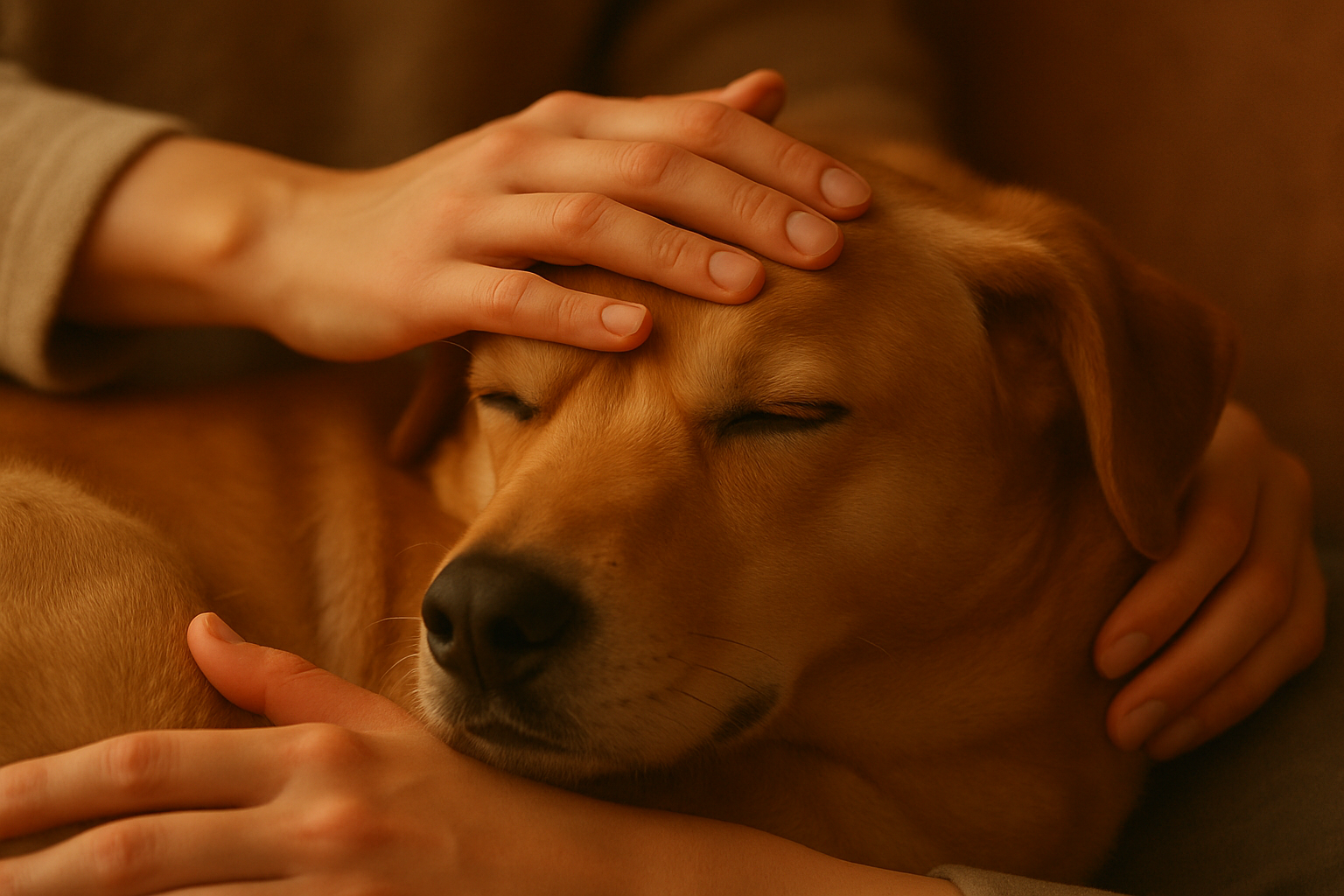
Research shows that when humans and dogs look into each other’s eyes, both release oxytocin. It’s a mutual feedback loop that builds trust and connection… just like between a parent and baby.
This explains why:
- You feel calmer when your fur baby cuddles up to you
- Children often open up more to dogs than to adults
- Emotional support dogs can help reduce trauma responses
Oxytocin lowers stress, slows the heart rate and signals to the brain:
“You’re not in danger. You can let your guard down.”
In children who’ve experienced anxiety, overstimulation or rejection (such as RSD… Rejection Sensitive Dysphoria), this is gold.
A gentle nuzzle or slow blink from a dog is the emotional equivalent of a warm hug and a deep breath… without needing to explain anything.
But Don’t Just Take Our Word For It… The Research is Clear
Here’s what science has discovered about the power of dogs:
- A 2009 study found that oxytocin levels rose by 300% in humans after just a few minutes of gentle interaction with their dogs.
- Cortisol (the stress hormone) dropped significantly in people after petting a calm dog for 5–10 minutes.
- Children with autism showed increased social interaction and reduced anxiety when a therapy dog was present in sessions.
- School programs with regular dog visits reported improvements in focus, self-regulation, empathy and classroom engagement.
And none of these involved “training” the child to behave better. The presence of the dog naturally invited safety, connection and calm.
Cortisol vs Oxytocin: A Daily Battle in Young Brains
Let’s take a moment to talk about cortisol… the hormone released during stress.
When cortisol is high, the brain and body go into survival mode:
- Heart rate increases
- Breathing becomes shallow
- Muscles tense up
- The logical part of the brain (prefrontal cortex) shuts down
- The emotional brain (amygdala) takes over
This is great if you’re running from a tiger. Not so great if you’re just trying to sit through a noisy classroom or handle rejection from a friend.
Kids who live with ADHD, anxiety, trauma or sensory sensitivity often have elevated cortisol levels. Their nervous system is on high alert, all the time.
This is where dogs shine.
Dogs help shift the nervous system from “fight or flight” into “rest and digest”… through co-regulation.
A warm dog lying nearby. A steady rhythm of breathing. The soft sound of gentle panting.
All of these send messages to the brain:
“It’s safe here. We can breathe now.”
And when oxytocin flows in, cortisol drops. It’s a chemical balancing act… one that dogs are naturally gifted at supporting.
Why This Matters in Schools and Support Settings
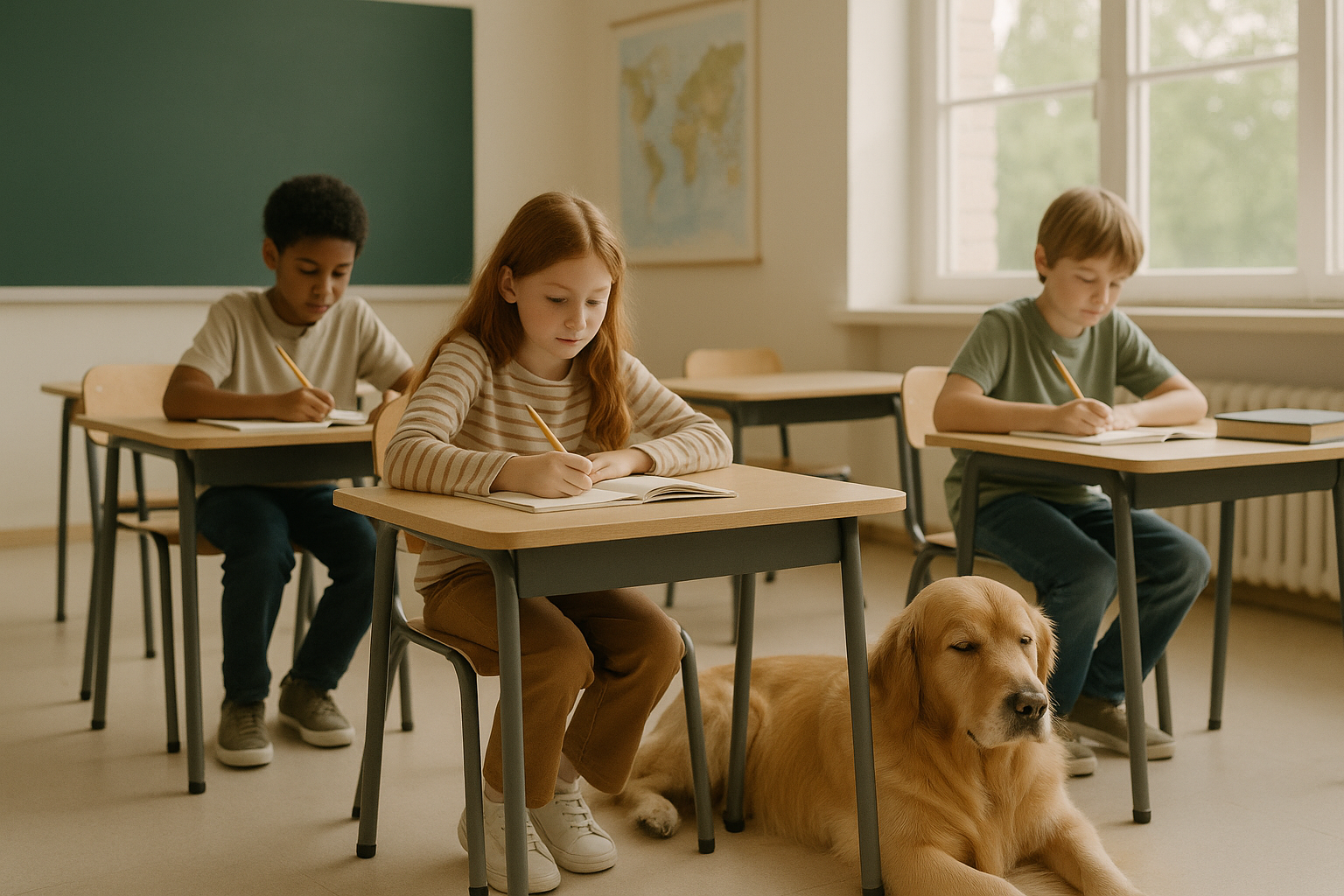
In a classroom, a support group or even a therapy session, emotional safety is the foundation for all learning and growth.
But many children (and adults) arrive in these settings already stressed. Their brains are flooded with cortisol. Their behaviour might look “difficult,” but it’s often just dysregulation… a body trying to protect itself.
Dogs don’t demand emotional regulation.
They model it.
A calm dog:
- Doesn’t rush
- Doesn’t judge
- Doesn’t expect perfect behaviour
Instead, they simply be. And that presence helps others begin to regulate too.
In school settings, dogs have been shown to:
- Increase focus and attention
- Reduce classroom disruptions
- Support students with ADHD, autism and anxiety
- Create safe bridges between staff and students
In support settings, dogs often help clients:
- Open up during hard conversations
- Return from shutdown or panic states
- Feel grounded during trauma processing
- Build confidence through “dog jobs” (e.g. brushing, walking, caring for the dog)
The Trust Loop: Why Dogs Help Us Feel Emotionally Safe
Emotional safety isn’t just about feeling calm. It’s about knowing:
- I can be myself
- I won’t be judged
- I’m allowed to have big feelings
- Someone is here for me… even if I can’t explain what’s wrong
Dogs provide this without words. Without expectations. Without pressure.
When a dog chooses to sit beside you, lick your hand or lean into your body… it communicates trust. And being trusted helps us learn to trust ourselves again.
That’s the real magic: emotional safety creates emotional growth.
And with a dog by your side, that growth often comes faster, easier and more naturally than you’d ever expect.
Bringing It Into Everyday Practice
Even if you don’t have a trained emotional support dog, you can still bring some of this science-based safety into your space.
Here’s how:
1. Introduce Calming Routines With a Pet or Paw-Pal
Teach children to breathe deeply while stroking the dog. Or use the dog’s name as a regulation cue:
“Let’s do five slow breaths like Max.”
2. Use Dog-Inspired Language for Feelings
- “He’s wagging like a happy pup!”
- “Do you feel like a growly dog or a sleepy dog right now?”
This playful language makes emotional states less scary… and easier to talk about.
3. Create Visuals of the Happy Hormones
Make posters or cards that show “What Happens in My Brain When I Pet a Dog.”
Include oxytocin, cortisol and breathing changes… kids love learning the science behind their feelings!
4. Support Sensory Regulation
A dog’s fur, breath or heartbeat can help anchor overstimulated senses. Let children lie next to a calm dog during downtime or recovery periods.
Final Woof
Dogs don’t have degrees in neuroscience… but they sure know how to teach it.
Through every soft tail wag, every loyal gaze and every quiet presence beside a stressed-out child or overwhelmed adult, dogs help us regulate, connect and feel safe in our own skin again.
They remind us that emotional safety isn’t earned… it’s offered.
And in a world that moves too fast, expects too much and often misunderstands big feelings, our four-legged friends offer something rare and precious:
Unspoken trust. Unconditional calm. And brain chemistry that says, “You’re not alone.”